
Lake and Pond Dredging
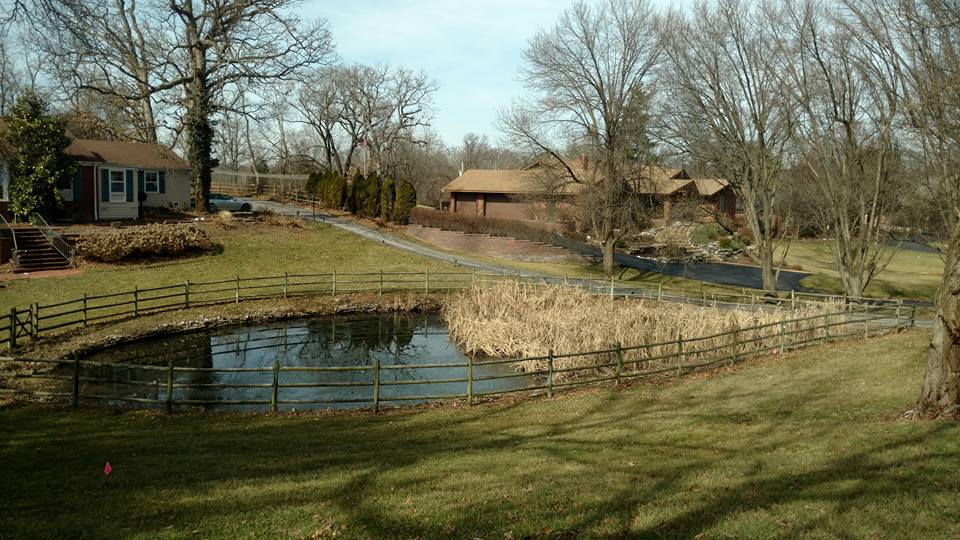
Lake and Pond Dredging can improve water quality by reducing the amount of nutrients available from the sediments, thereby reducing nuisance algae blooms. This can occur through direct sediment removal of nutrient-rich sediments, or by deepening the lake enough to allow thermal stratification to develop and thereby limit nutrient movement from deep-water areas to the upper waters. Lake and Pond Dredging in areas of rooted aquatic plants controls their growth through direct removal of the lake weeds, removing nutrient rich sediments and also can limit future regrowth if the new water depths are deeper than sunlight can reach. For lakes that freeze over in the winter, fish survival can be enhanced by removing oxygen-demanding sediments – aquatic vegetation and creating deeper water areas.
Hydraulic Dredging
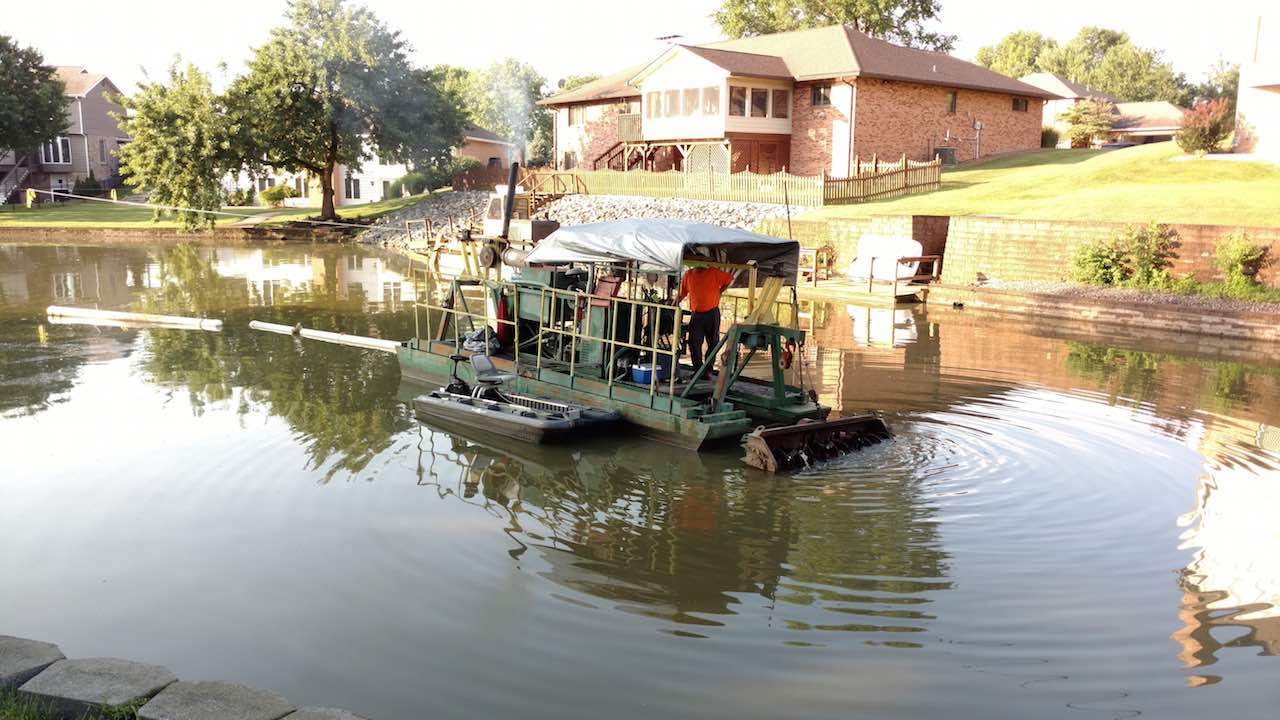
Hydraulic dredges create slurries, combinations of solids and water, pump the slurries to the surface of the ponds or lakes, and then pump the slurries through floating and land based pipe to disposal sites in a continuous process.
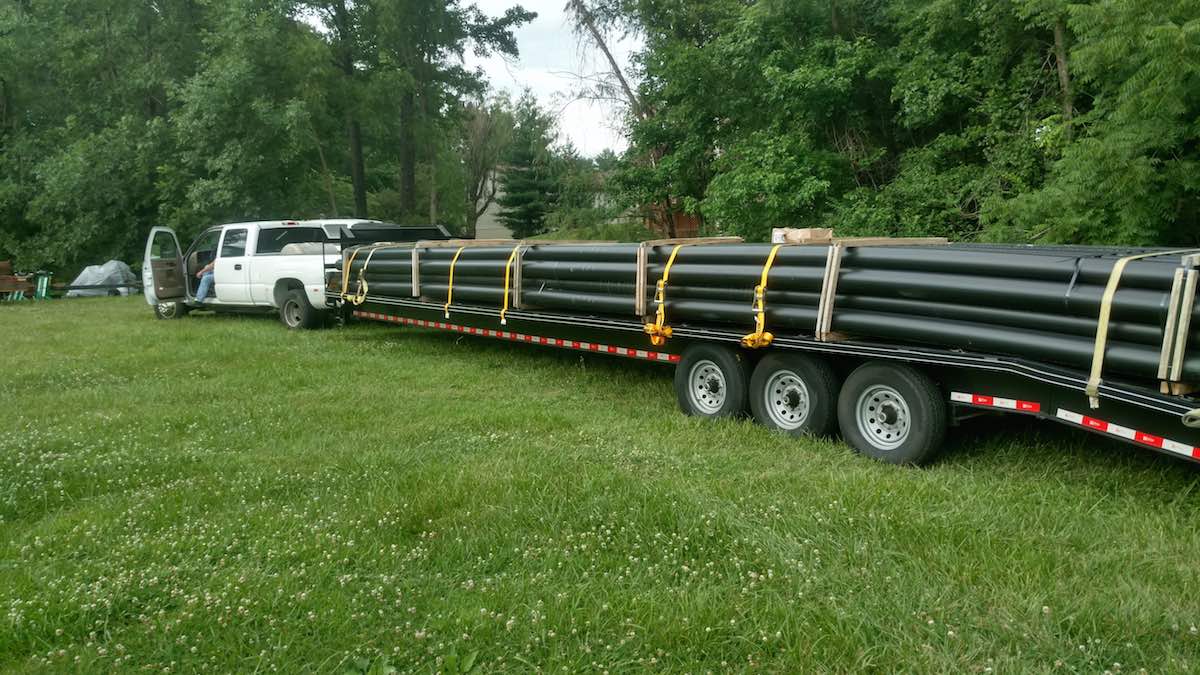
Basic components of hydraulic dredges include a cutterhead, pump, floatation system or platform, engine or motor, control system, and the discharge system. Cutterheads dig up settled solids in the waterway to be dredged and create slurries. A powerful centrifugal pump mounted directly behind the cutterhead draws the slurry into a discharge piping system, pushes the slurry to the surface, and then to the discharge site, often thousands of feet away from the dredging site. The slurry can be discharged in to a settling pond or into Geotextile tubes for dewatering. Polymers are often used to assist in the dewatering process by flocculating the solids, making them heavy and sink to the bottom. This leaves the water clean and free to discharge back to the pond.
Hydraulic Dredging in to textile tubes, how it works:
Hydraulic Dredging into tubes for containment and dewatering of industrial waste, municipal sludge, and marine sediments, paper mills, chemical companies are just a few of the clients that have benefited from this process.
Containment
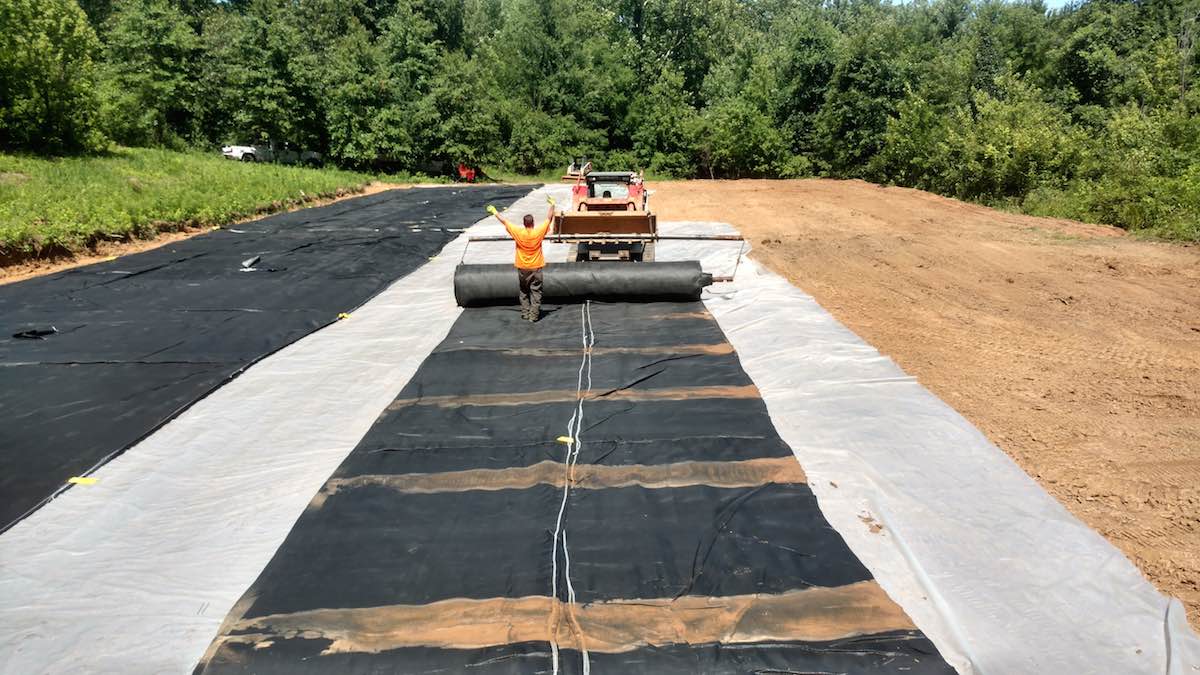
High strength permeable tubes with uniquely designed retention properties are fabricated tubes that can be filled with sand, sediments, fine grain sludge, hazardous contaminated soils, or dredged waste materials.
Dewatering
Excess water drains from the tubes through the small pores resulting in effective dewatering and efficient volume reduction of the contained material. This volume reduction allows for the repeated filling of the tubes. In most cases the water is of a quality that can be returned to native waterways or for reuse.
Consolidation
After the final cycle of filling and dewatering, the retained sediments, sludge, sand materials can continue to consolidate by evaporation as the water escapes through the tube.
Removal or use as Erosion control or Landscape
Once the sediments dry within the bag, they bags are opened and the sediments can be hauled off. Or can be used as erosion control or covered and made part of the landscape. If hazardous it taken to offsite facility.
Adding a Polymer to the Hydraulic Dredging and geo textile or tube process:
Some projects may require a Polymer additive during the sediment removal process, once the sediments are transferred from the small or large hydraulic dredging machine. This can be very useful when targeting to remove certain nutrients from the sediments, like phosphate.
During the sediment removal process there are a variety of polymers that are available and formulated to match the sediment or sludge material being dredged or dewatered. The use of the polymer allows the sediments and tube technology to perform efficiently together, most cases allows the sediments to cure faster into a solid material. The solids are separated from the water more easily, which can allow the water to drain quicker for the tube.
Mechanical Dredging
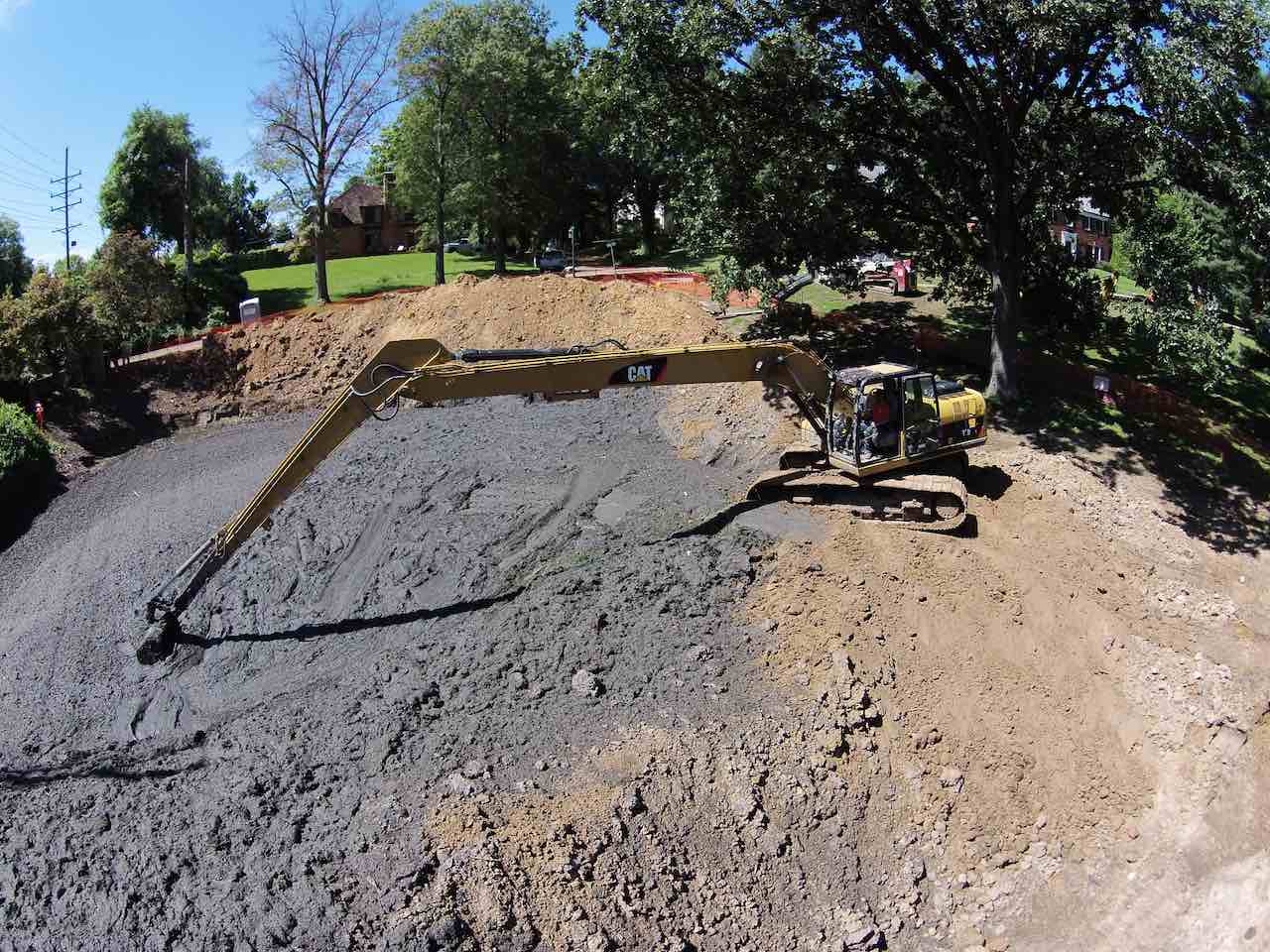
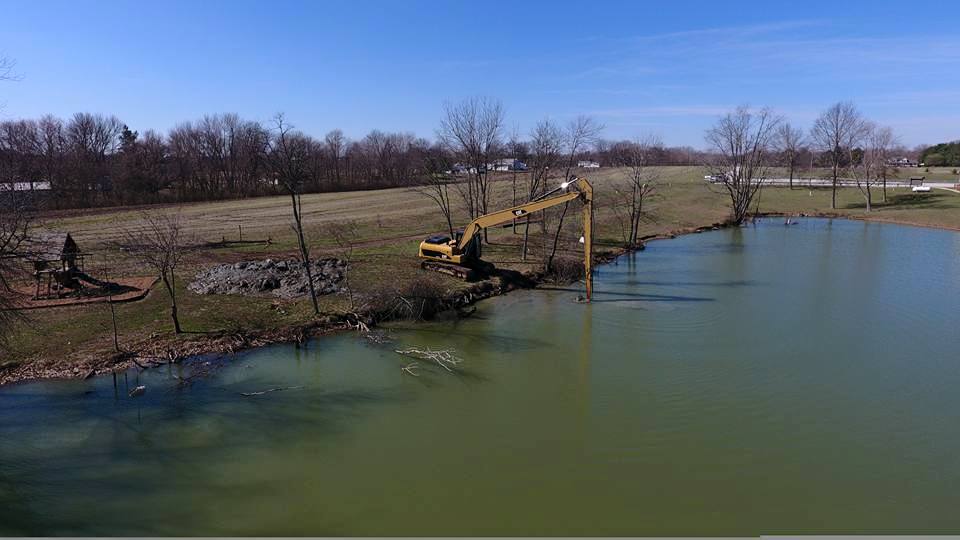
Mechanical Dredging may be the best choice verses Hydraulic Dredging depending on several different factors. If you have a lot of stumps, trees and debris mechanical dredging can be a better choice. Also a distant disposal area for your sediments may be a reason you may choose mechanical dredging, the further away the site you may need to have the sediments hauled away by our trucks. The distance a hydraulic dredge can pump the sediment is limited. Dredging from shore with one of our 60 feet Long Reach excavators can make it convenient to dredge and remove sediments for areas that need to be dredged close to shore. Whether it be a pond, lakefront, canal, inlet, boat slips a lot of our mechanical dredging equipment can reach it effectively.
Permits: some times the type of permit approved will dictate whether the area needs to be dredged mechanically or hydraulically, we can handle the permitting process for you. We can discuss and review your project and determine which process is best for you. Our company has both Mechanical and Hydraulic dredging equipment, both large and small machines to meet your needs.
Aquarious Amphibious Excavator
The Amphibious Dredger is a highly unique machine designed to work in areas that are inaccessible to conventional digging equipment. Ideal for use in canals, along shorelines, and in wetland areas, or around marina’s, the Amphibious Dredger readily tackles a variety of challenging applications. Working primarily from the water, it has a 22’ reach and can rotate 360 degrees infinitely.
This excavator features a barge mounted backhoe and three adjustable stabilizer legs. The stabilizer wheels provide flotation when extended, and act as stabilizers when positioned under the boat. The excavator also uses its wheels to load itself on and off of a trailer, and to roll itself in and out of the water. No crane is needed for launching, retrieving or repositioning the excavator.
More Information

Click below to download some additional information on Lake Dredging in Southern Illinois.